Type
Interior
Date
2024
Status
completed
Location
Isfahan/Iran
Scale
234
The subject of the project was the renovation of a newly completed apartment. The request stemmed from the owner’s dissatisfaction with the current interior not reflecting the desired sense of residence.
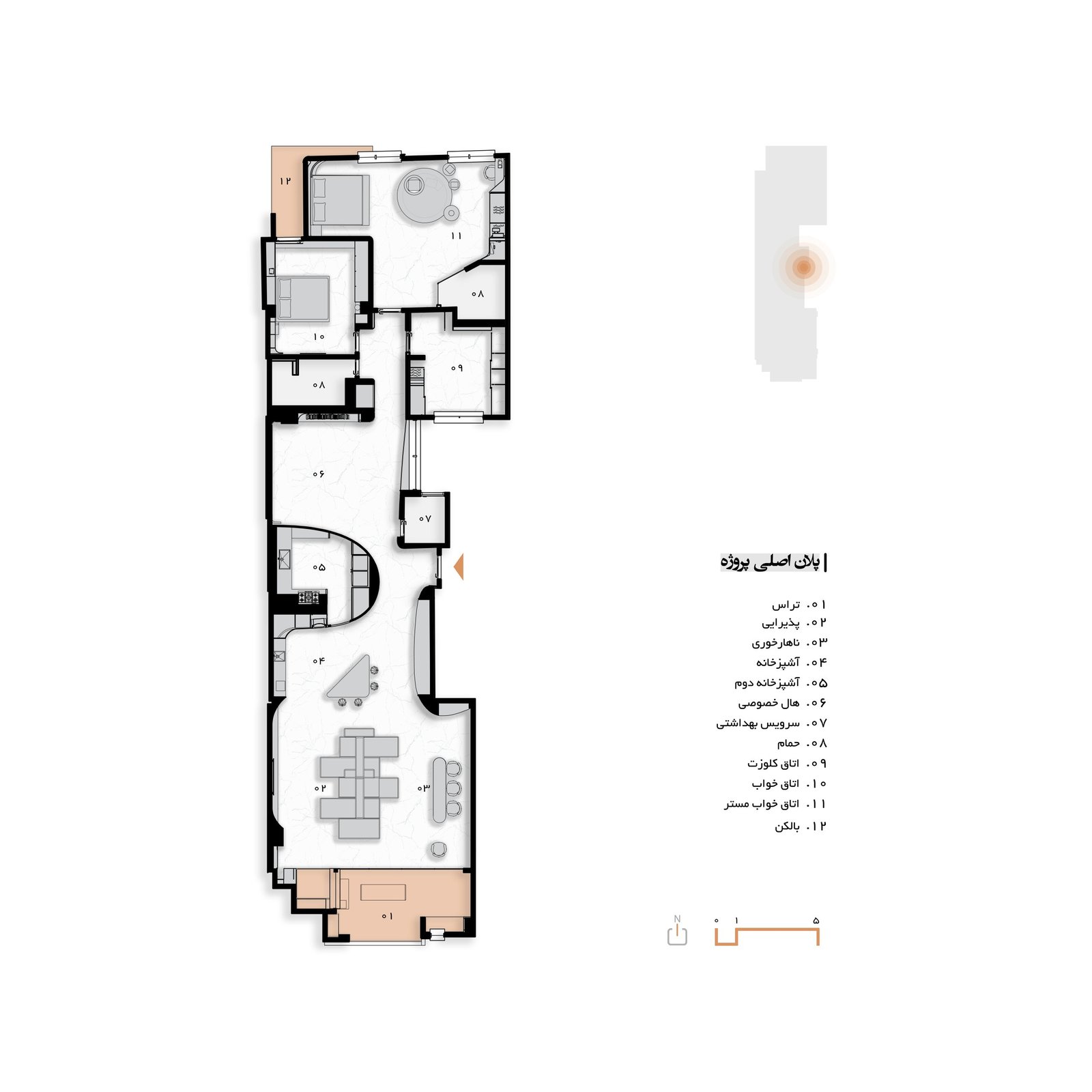
The interior architecture project began with analyzing the floor plan to identify its flaws and deficiencies:
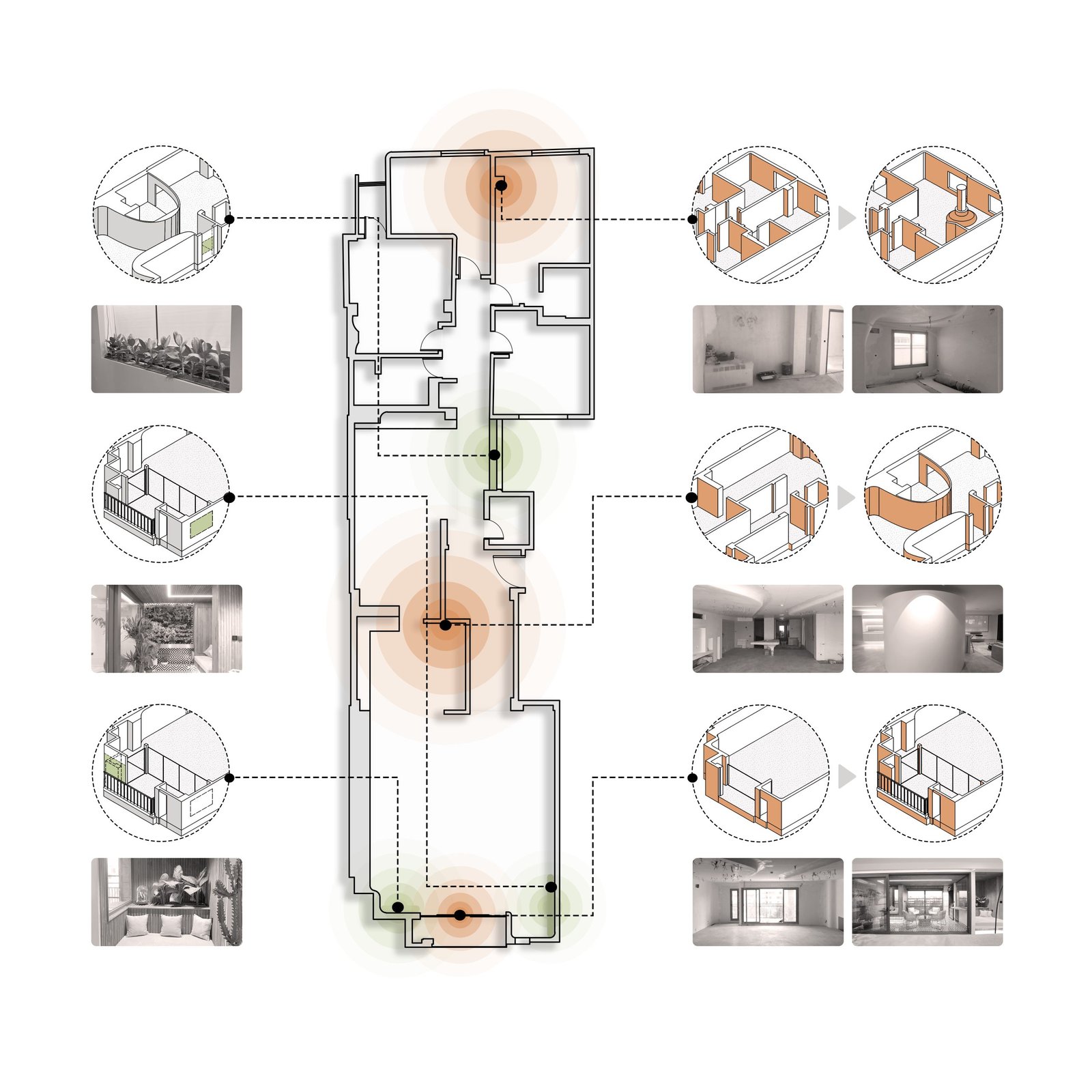
– The length-to-width ratio of the plan was excessively high, making the apartment appear narrow and elongated, visually shrinking its actual size.
– The apartment had a small and impractical terrace, affecting the quality and living experience of an outdoor space, which is essential for balancing indoor and outdoor environments.
– There was no provision for fixed vegetation anywhere in the apartment.
– The room divisions were such that there were too many rooms, none suitable as a master bedroom.
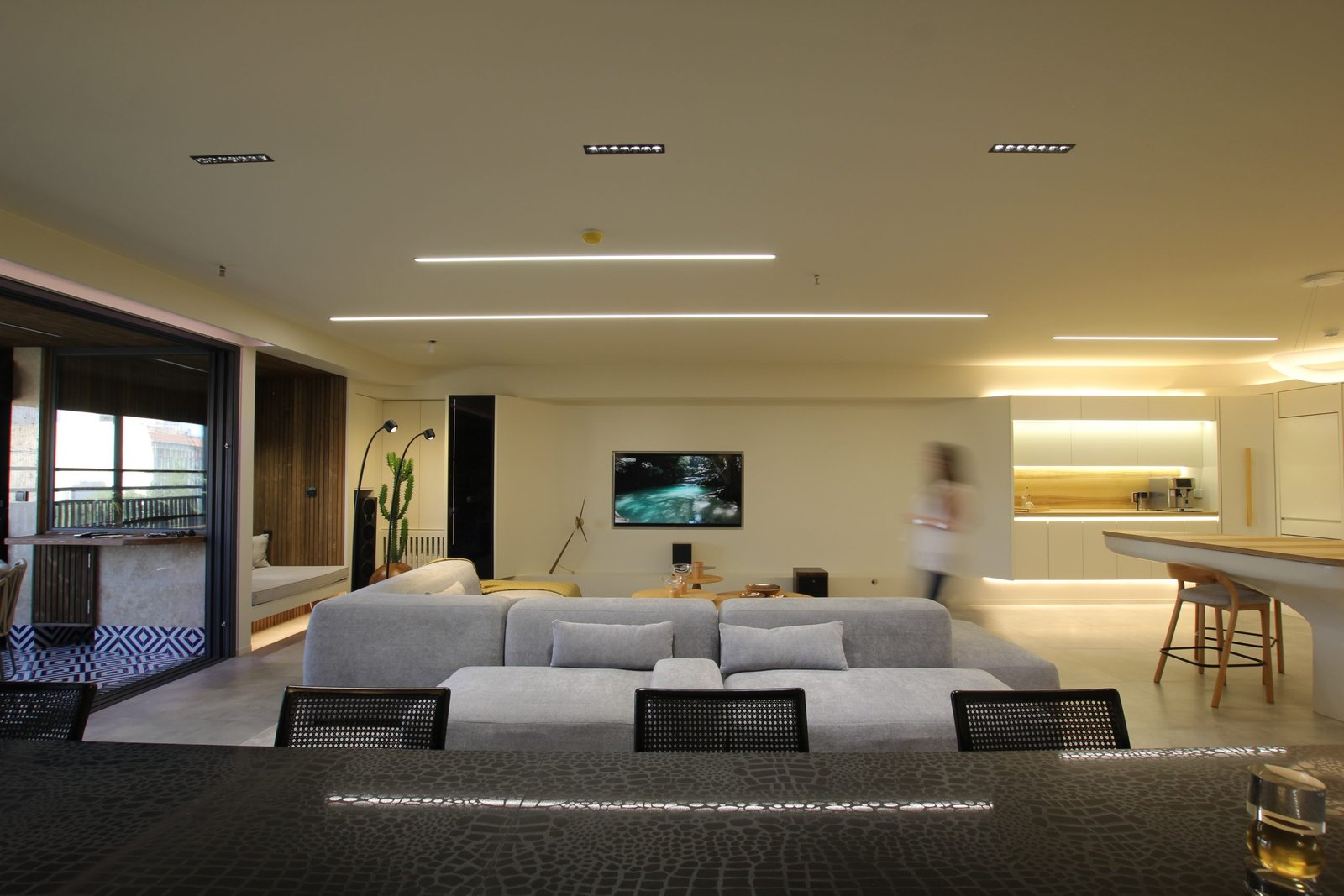
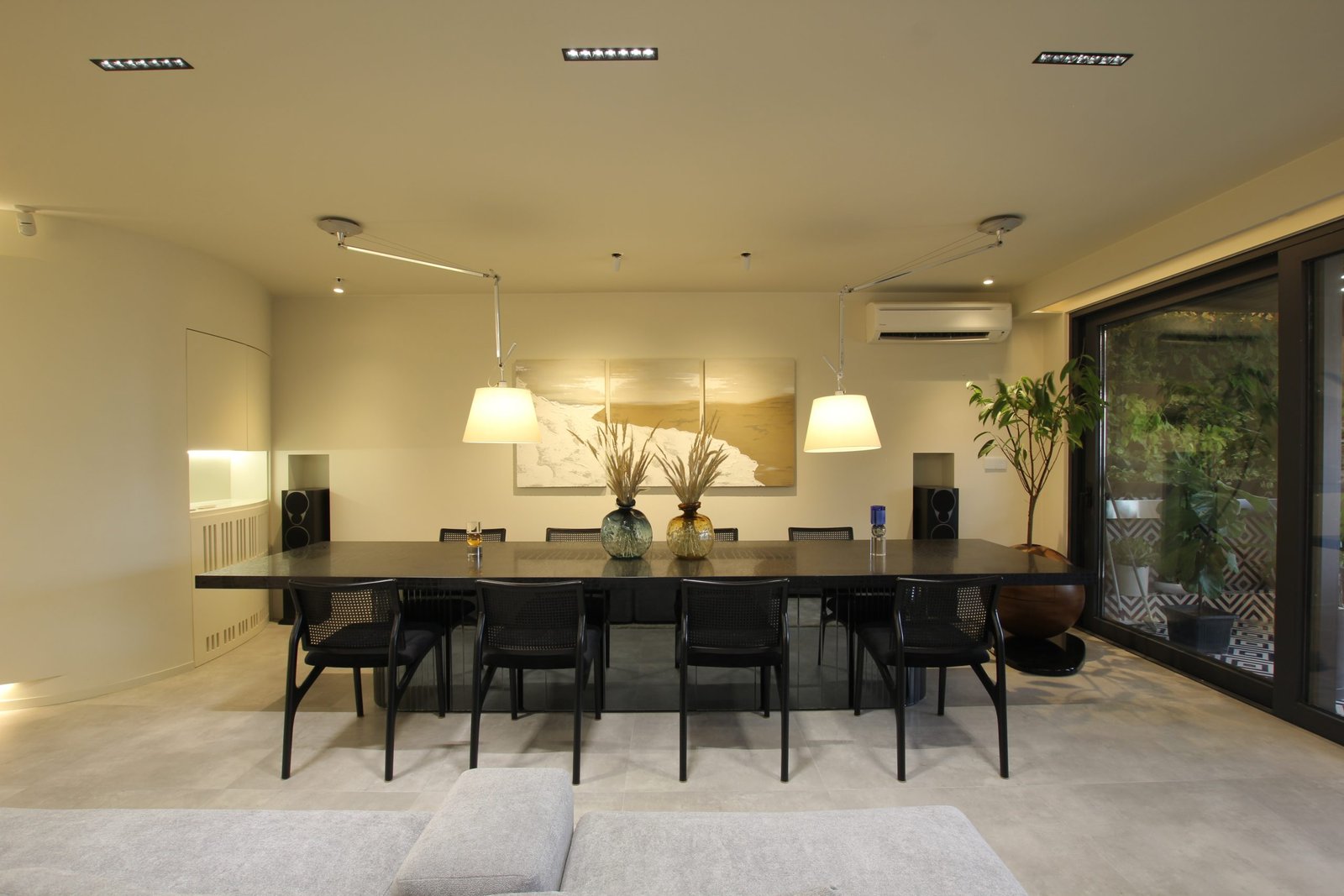
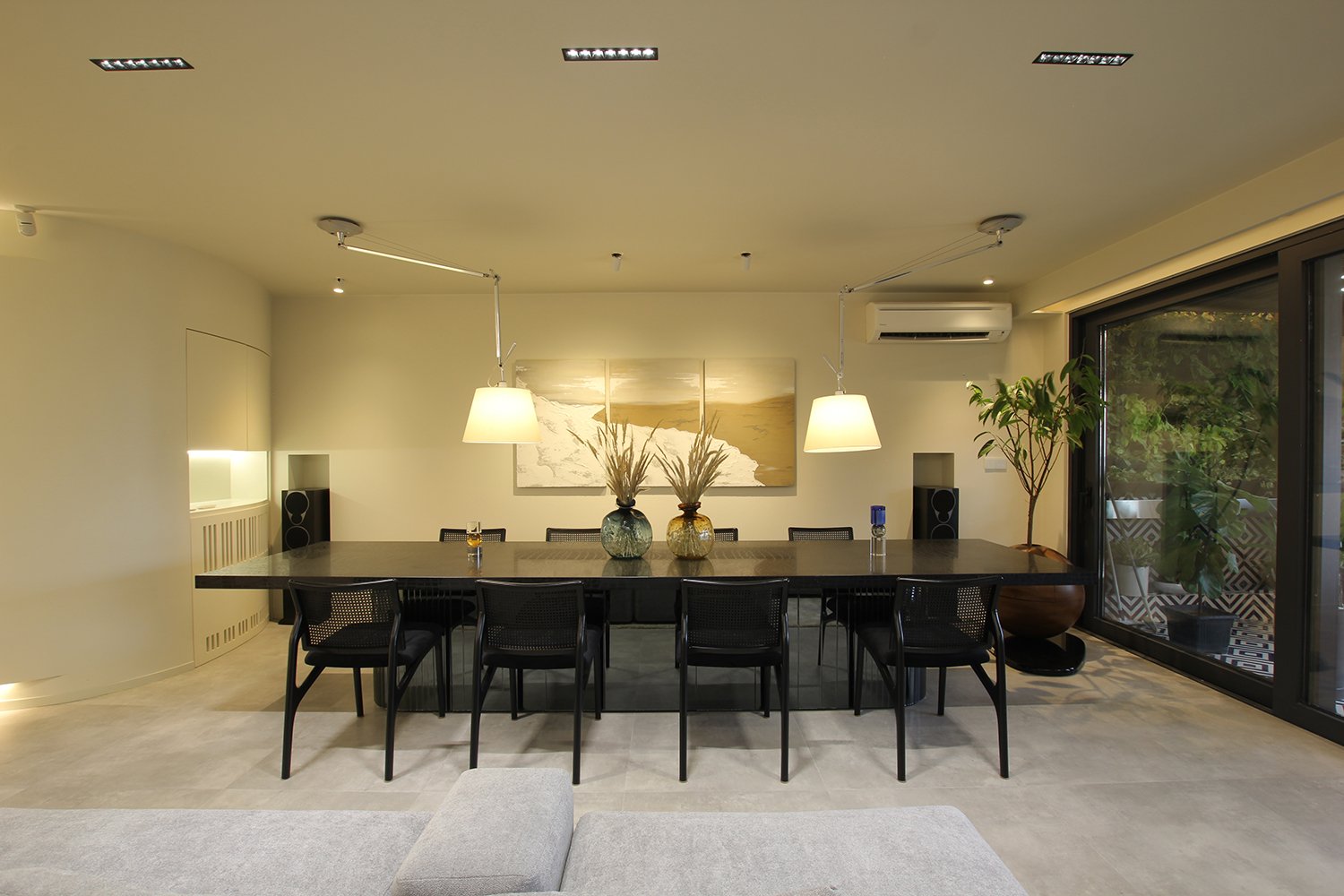
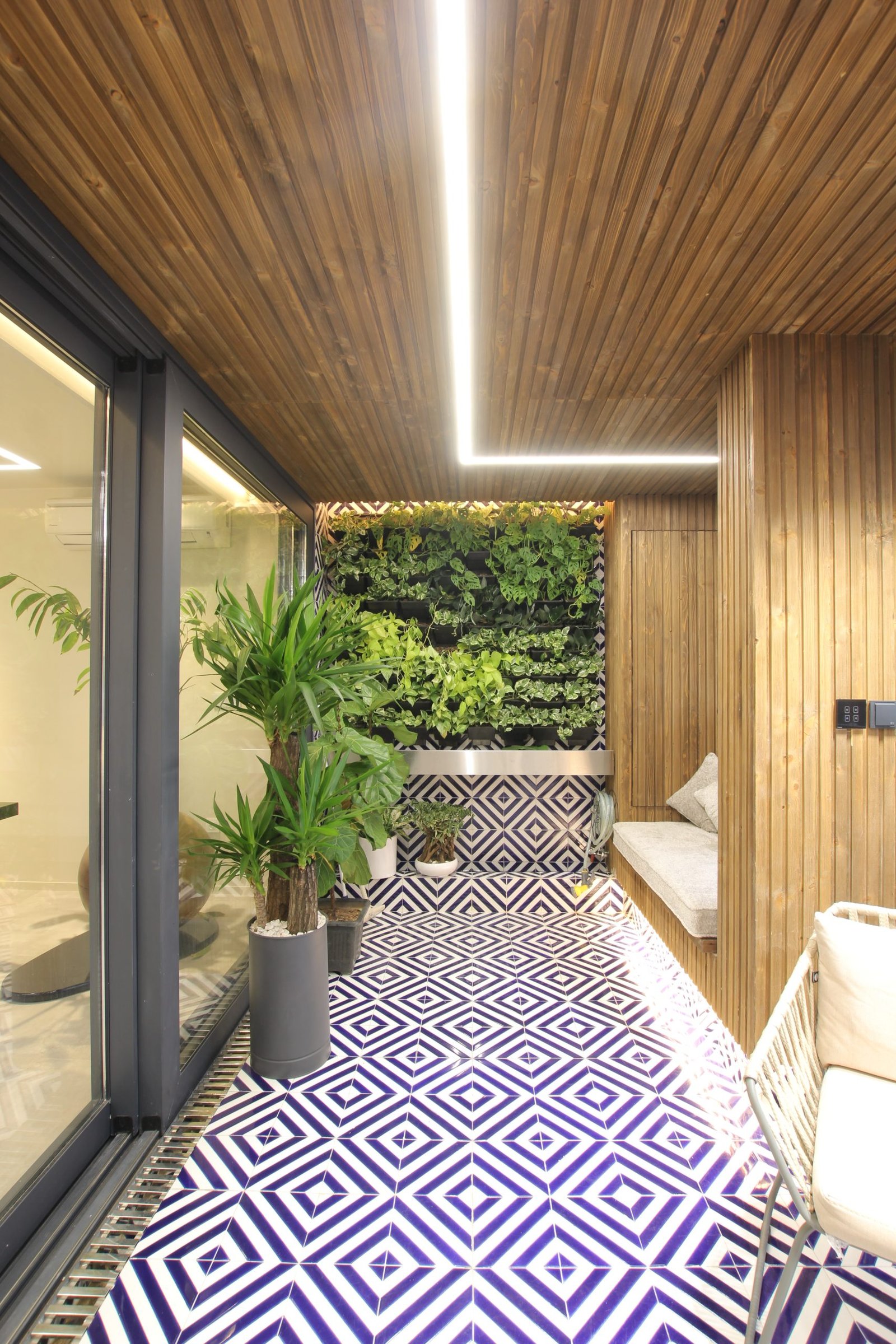
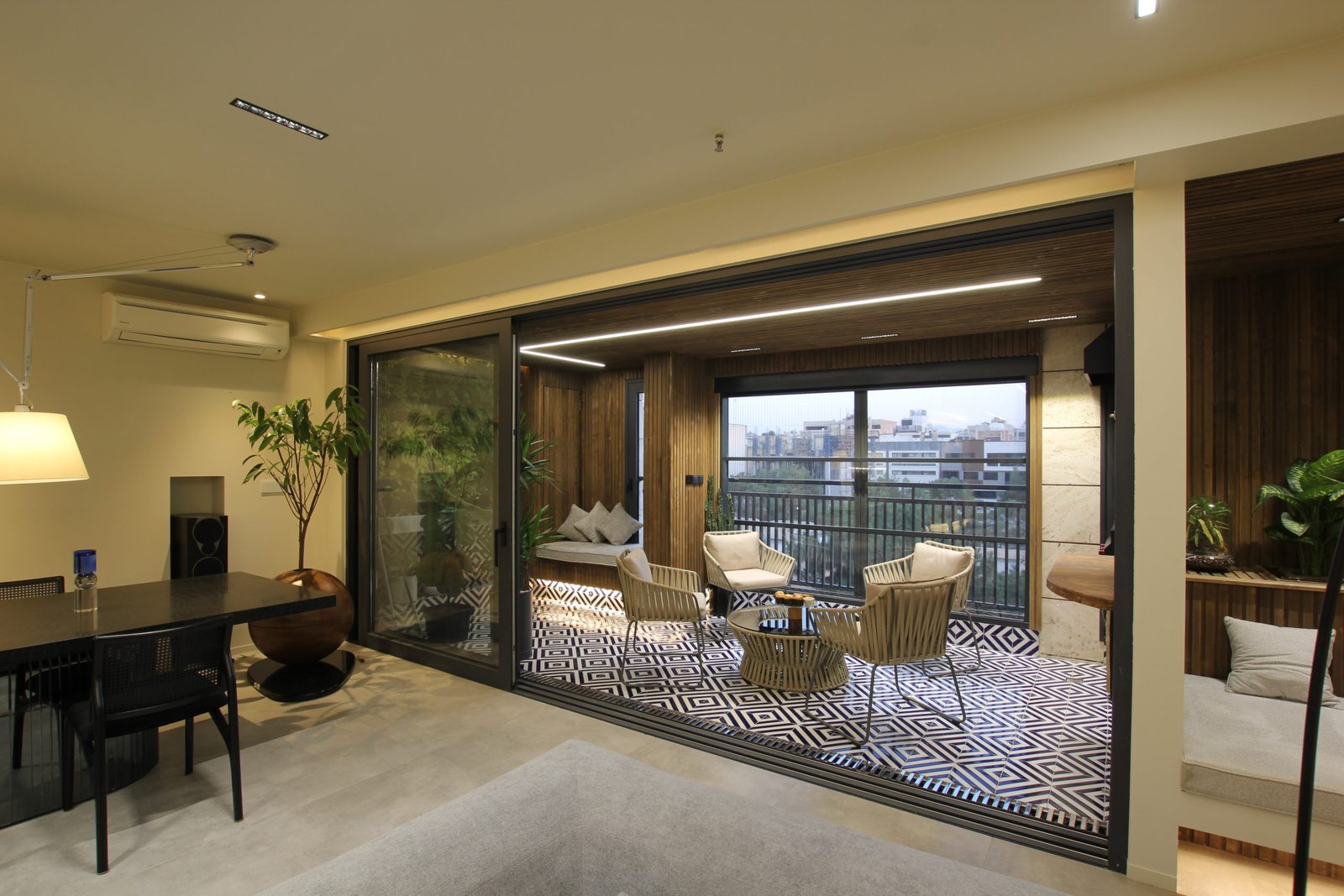
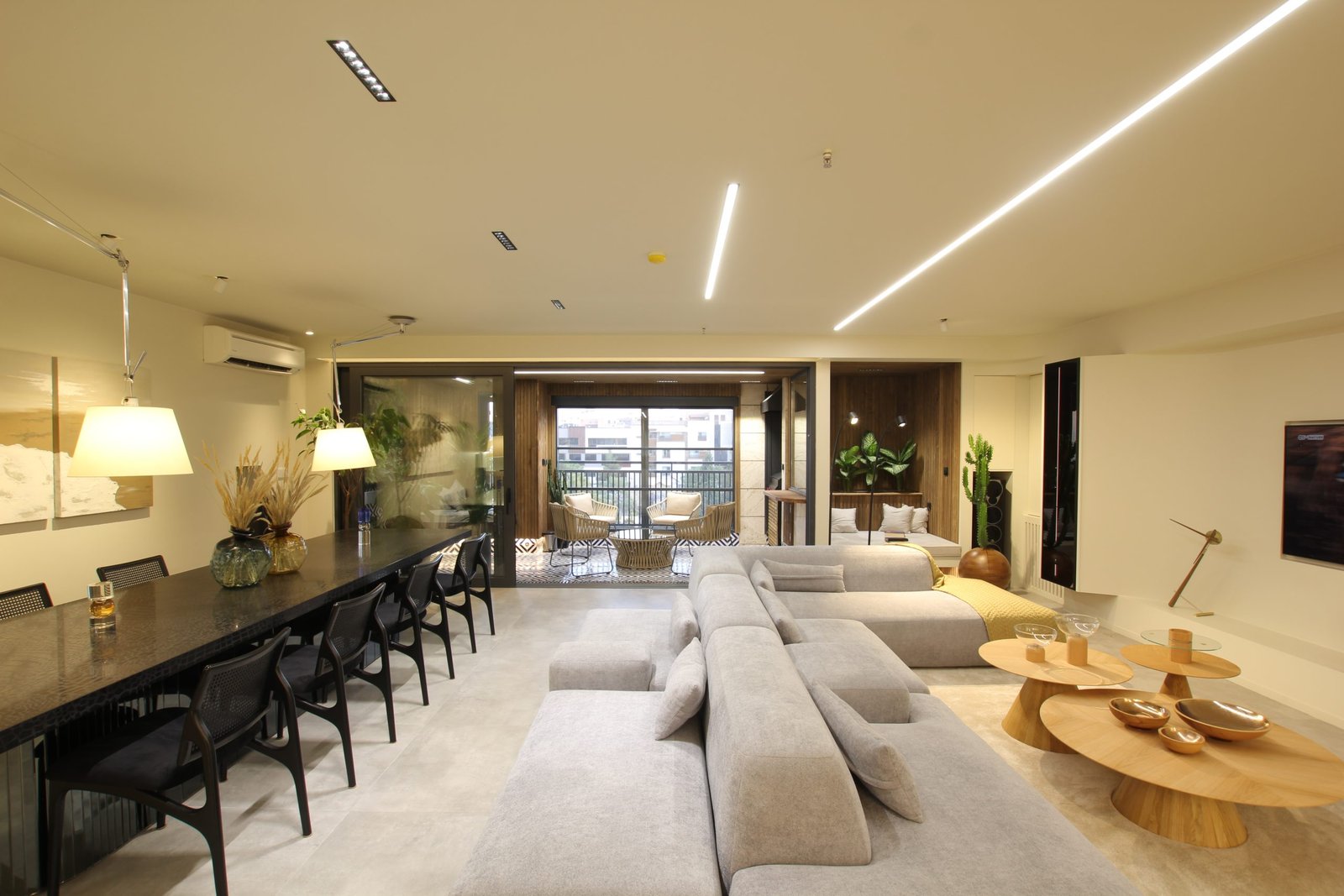
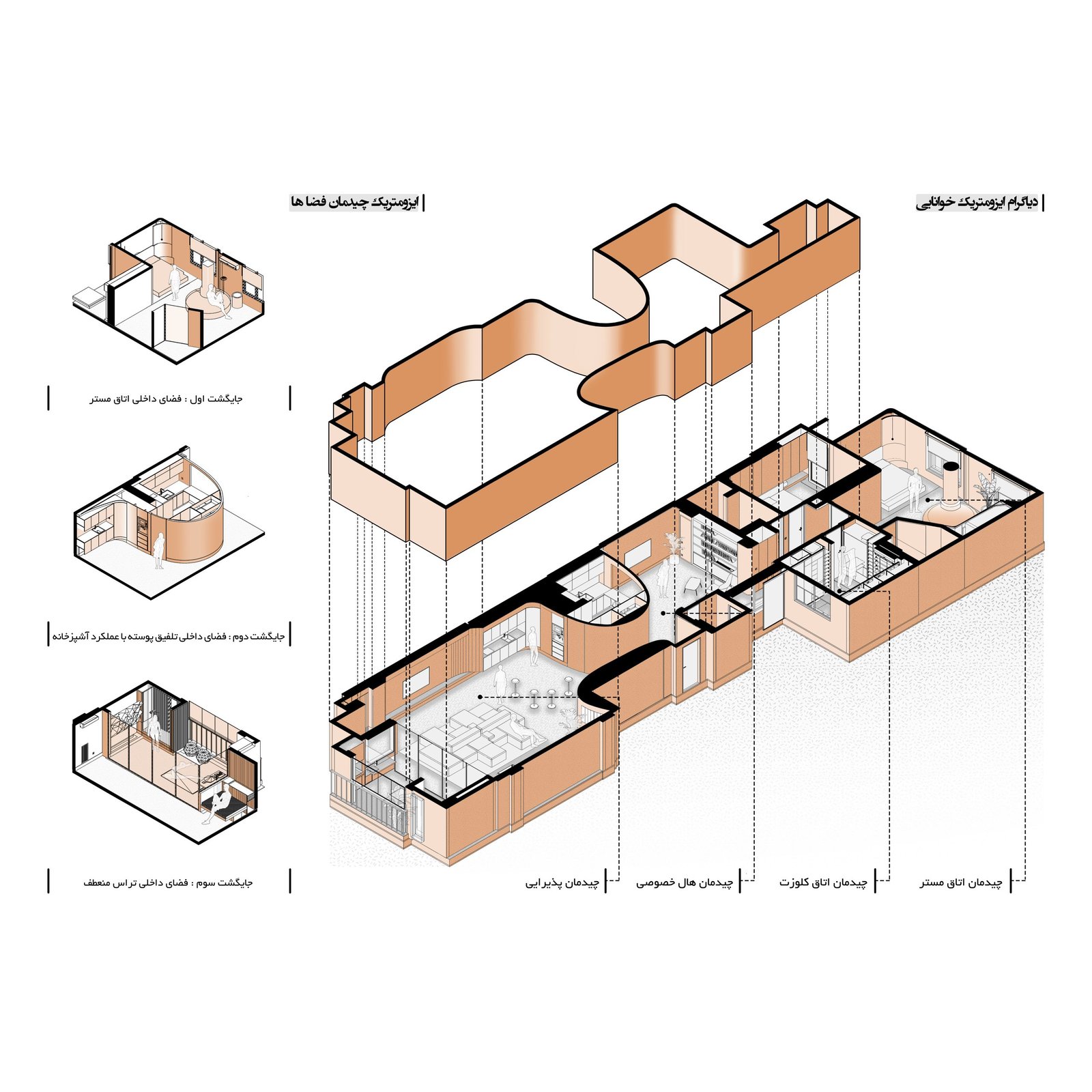
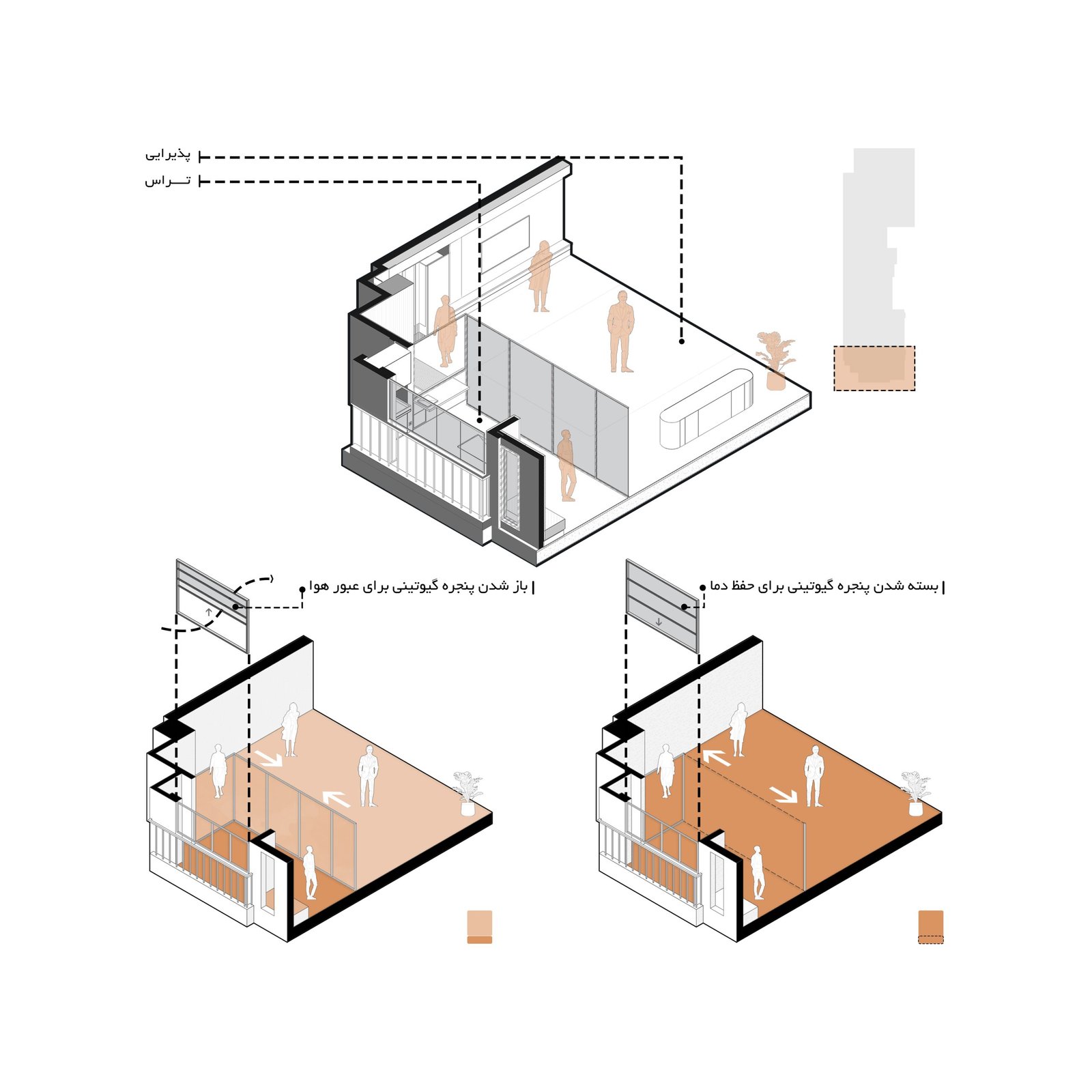
Part of the living room space was allocated to create a substantial terrace, incorporating a green wall that transformed it into the apartment’s lung. This terrace served as a dynamic intermediate space between inside and outside; opening its doors expanded the living room space, while closing the sliding windows on the terrace’s outer edge integrated it back into the interior.
The addition of this terrace also created diverse spatial qualities and experiences, including a lounging area and a small green corner in the living room and a bench in the terrace corner.
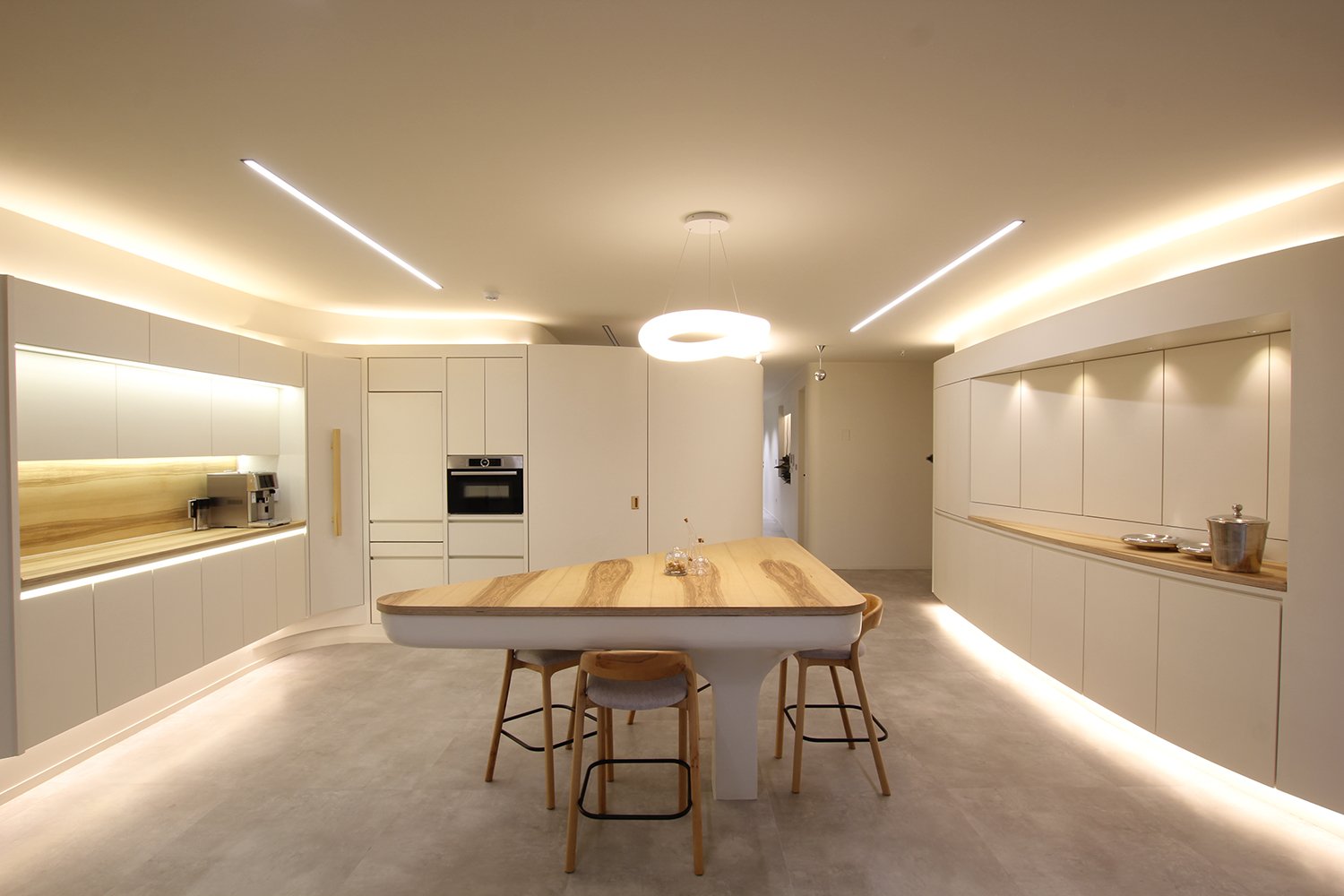
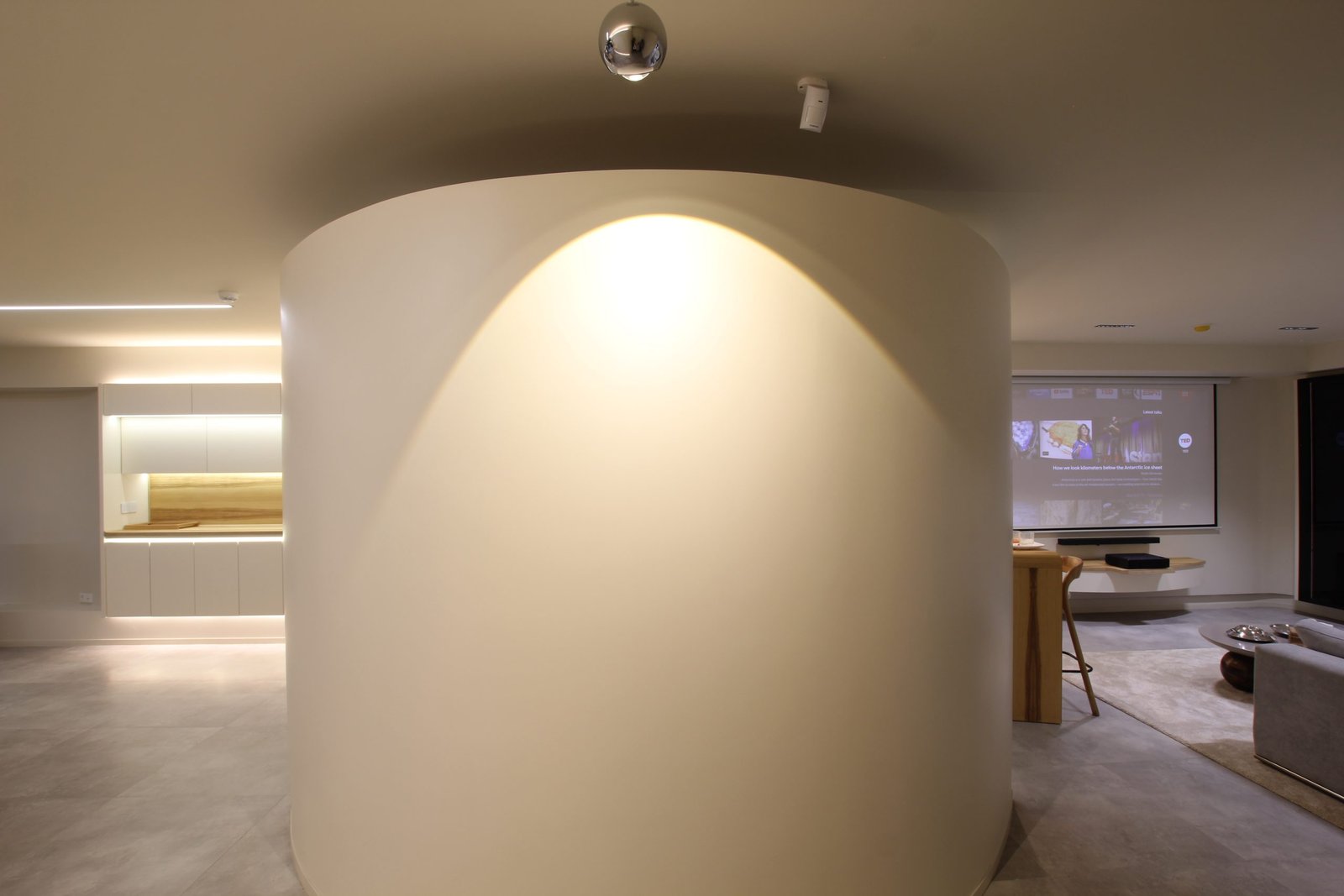
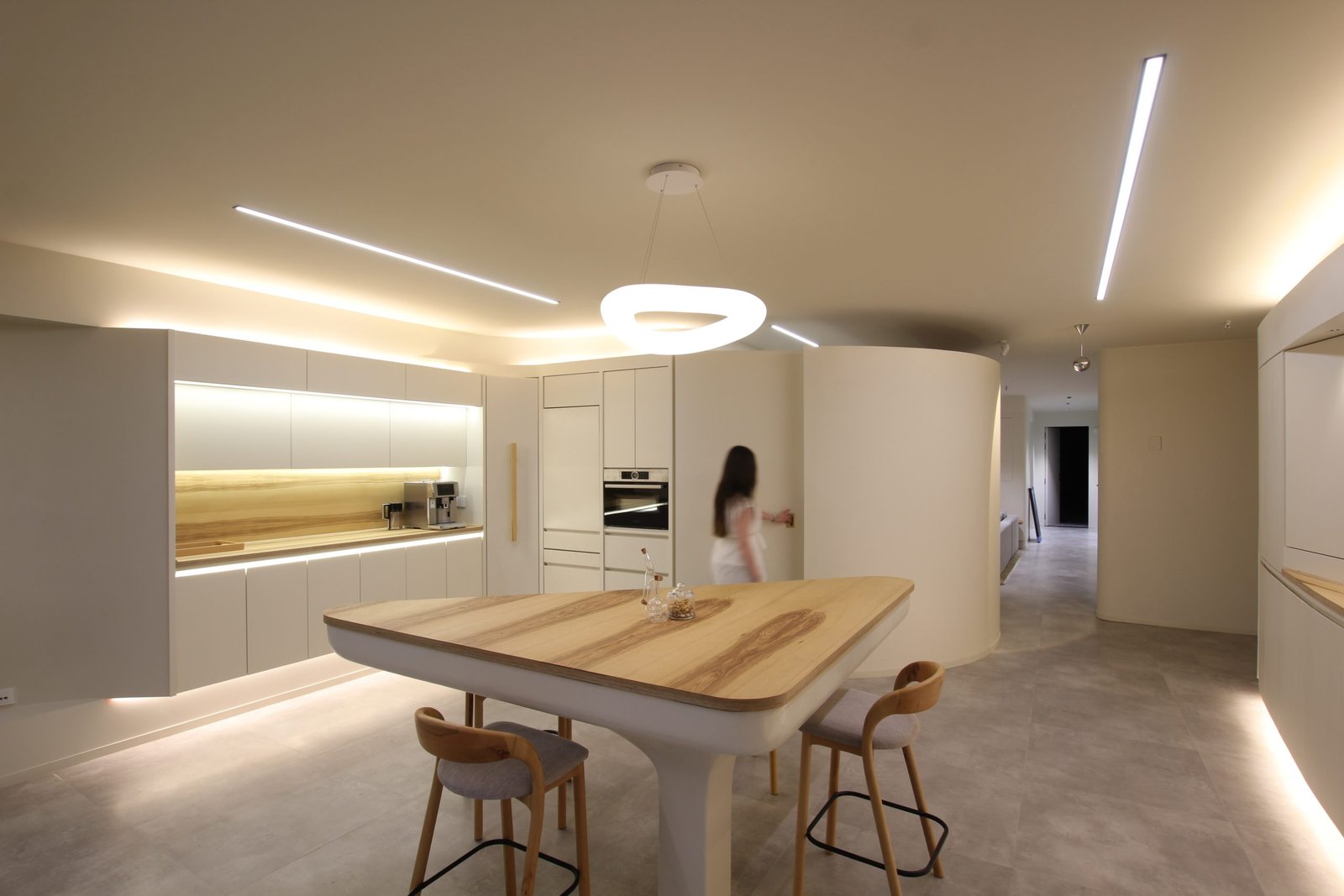
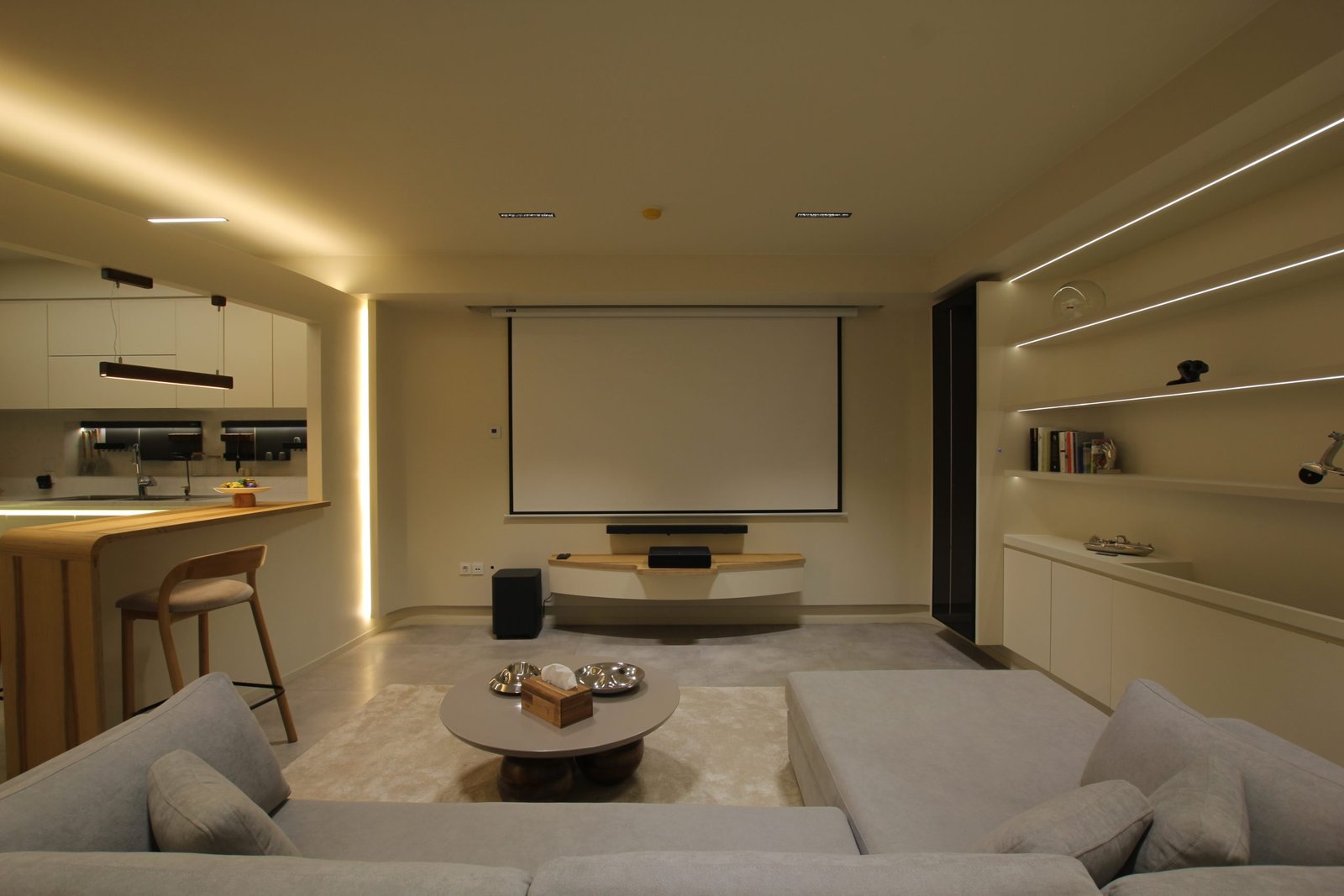
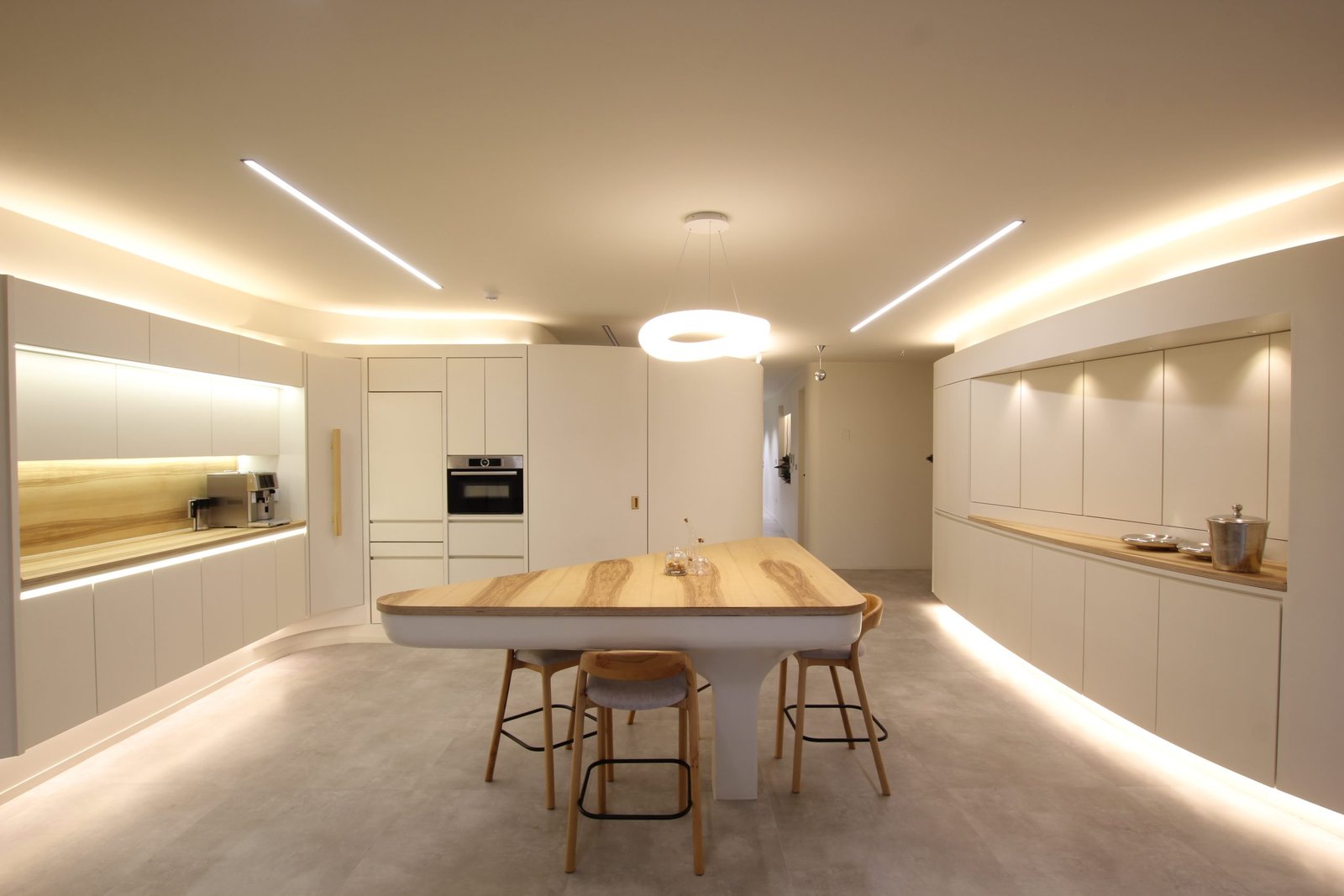
A second kitchen was defined in the middle of the project with a curve in such a way that its walls did not reach the ceiling and did not obstruct the viewer’s sight, thus giving the apartment a larger appearance and providing some light to the private space in the middle of the project.
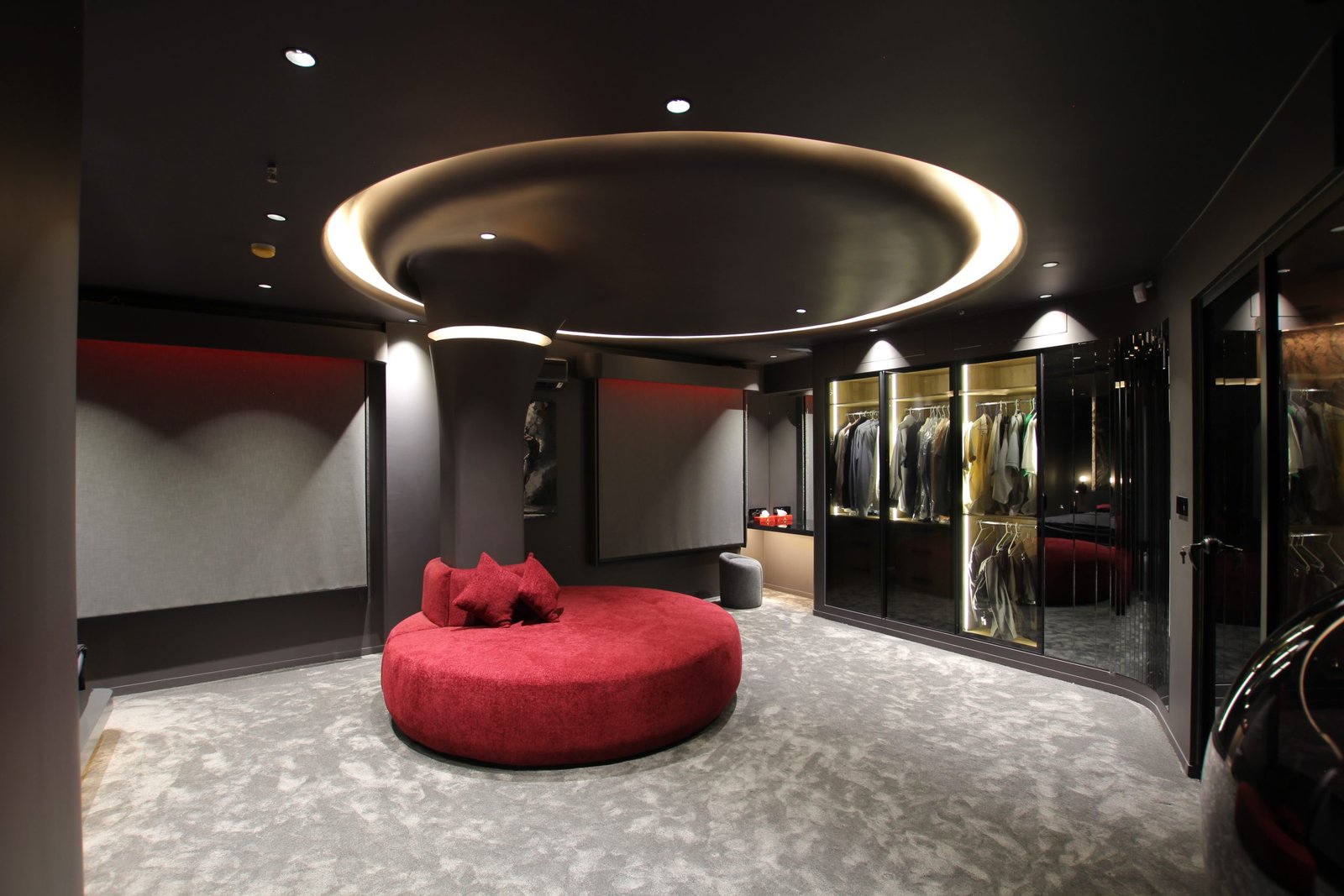
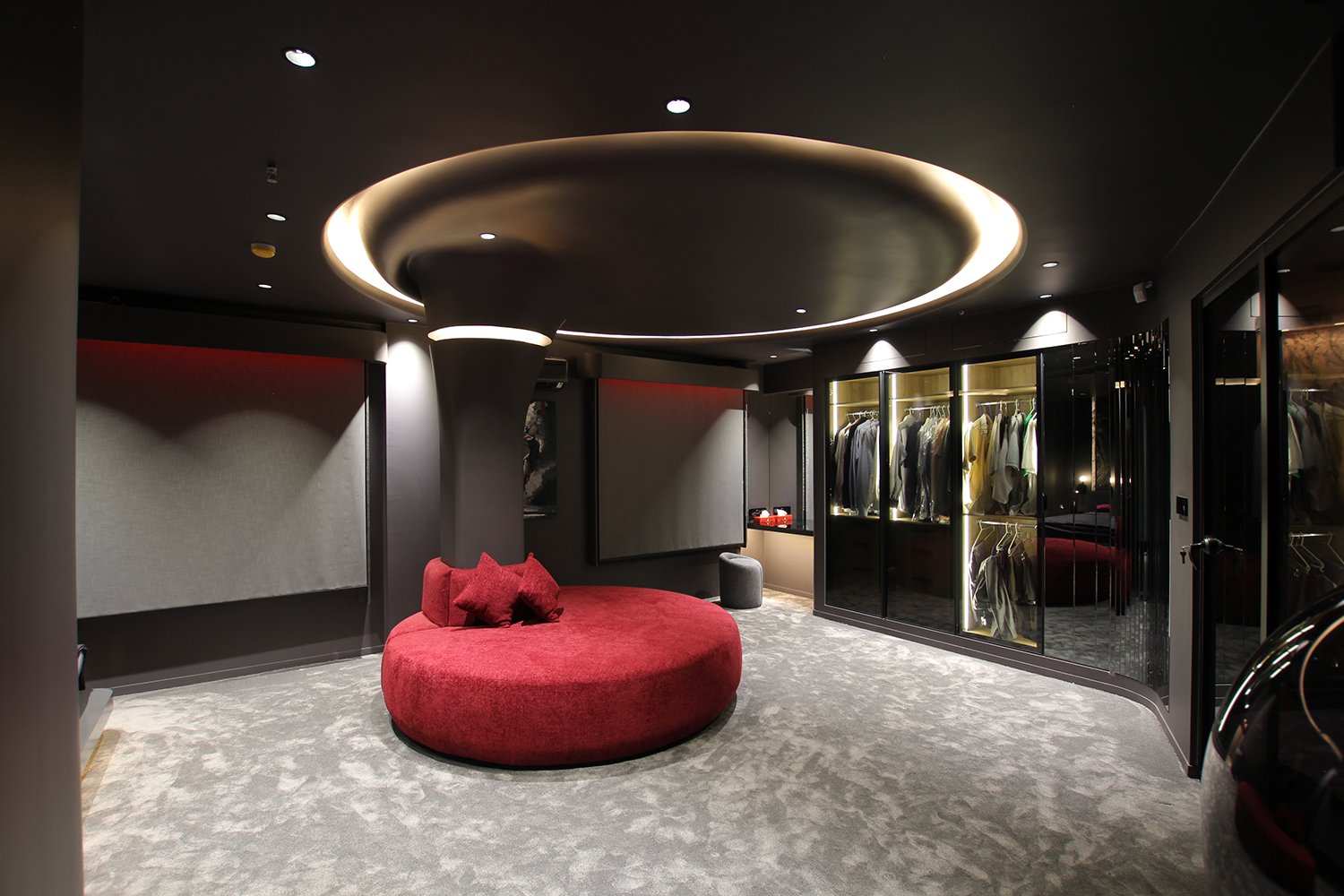
The next change was to transform two small rooms in the north of the project into a fully spacious master bedroom. By removing the walls between the rooms, a column remained, which was transformed into a sculptural element in the room’s design, and a piece of distinctive furniture was also added to it.
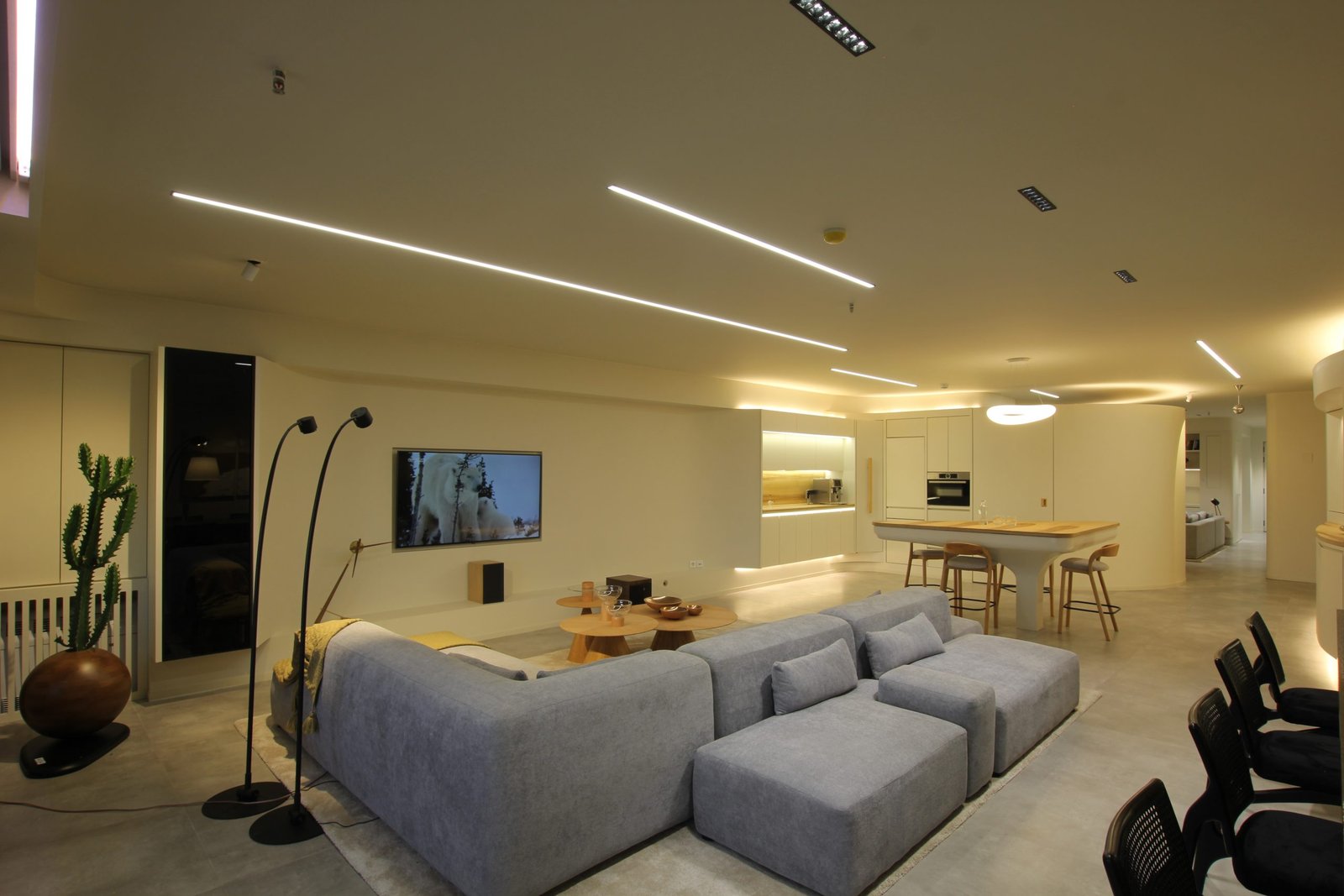
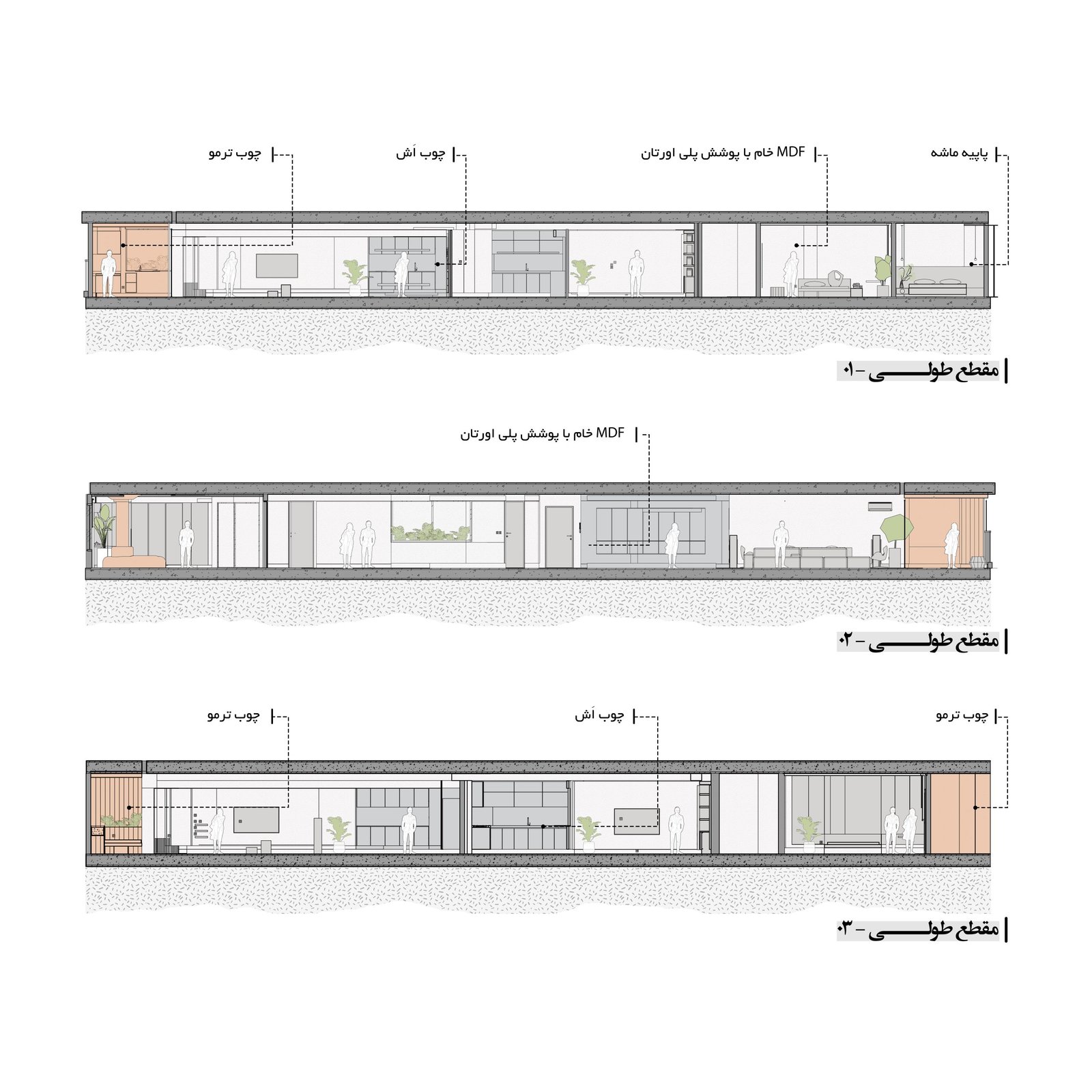
In interior design terms, a continuous, dynamic, and soft wall moved along the entire length of the public spaces. This wall created niches for various needs, including a TV stand, a bar table, a partition wall for the second kitchen, a place for a potted plant, and more.
In essence, the interior space was not just a collection of adjacent pieces but rather a cohesive sculptural unit. The walls became aesthetic and cognitive identity markers, transcending their role as mere dividers within the space.
In the final stage, in terms of interior decoration, the carefully selected colors, textures, lighting, furniture, curtains, and ornaments that were envisioned from the outset were meticulously added to the project. This ensured that the design consept maintained control over every detail from the project’s inception to its completion.